Guide
Embroidery stabiliser: which type for which fabric
Published
Note: This page contains affiliate links. If you buy through them we may earn a commission at no extra cost to you. Learn more
In short
Use tear-away stabiliser for stable woven fabrics, cut-away for knits and stretchy or loosely woven fabrics, wash-away for sheer fabrics, freestanding lace and as a topper on towels, and heat-away where water cannot be used. Match the weight to the design's density, and use a fine embroidery bobbin thread rather than normal sewing thread underneath.
Products for this job
Compare all 5 productsBrother PE900: 5 x 7 in field with wireless LAN
Check price on AmazonAffiliate linkJanome MC100E: 274 designs, 140 x 140 mm field
Check price on AmazonAffiliate linkBrother Innov-is M380D: sews and embroiders, Disney designs
Check price on AmazonAffiliate link
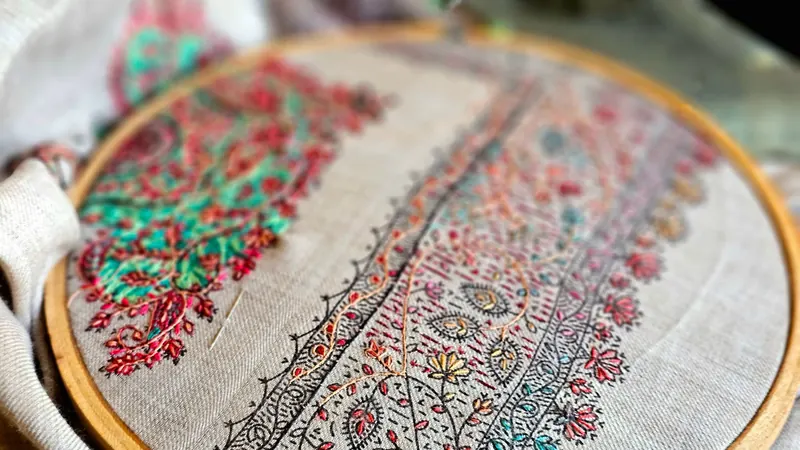
Stabiliser is the unseen support behind every neat machine embroidery design. Without it, the thousands of stitches in a design pull the fabric in, causing puckers, gaps and distorted shapes. Choosing the right type is one of the main skills beginners learn. This guide explains the four main stabiliser types, which fabrics each suits, how to choose a weight, when to use a topper, and why embroidery bobbin thread matters too.
What stabiliser does
Embroidery stitches pull on fabric in every direction. Stabiliser, also called backing, is hooped with the fabric or placed under it to hold it firm while stitching, so the design keeps its shape. Some types stay in the finished piece to support it for its whole life; others are removed once stitching is finished.
As a general rule, the stretchier or less stable the fabric, and the denser the design, the more support you need. A small outline design on cotton needs much less help than a dense fill design on a T-shirt.
The four main types of stabiliser
Most stabilisers fall into four groups, defined by how you remove them. Many come in different weights and in versions with an adhesive or fusible backing, which help hold fabric that is hard to hoop.
| Type | How it is removed | Best for |
|---|---|---|
| Tear-away | Torn away from the stitches after embroidery | Stable wovens: cotton, linen, denim, canvas, tea towels |
| Cut-away | Trimmed around the design; the rest stays in | Knits, sweatshirts, fleece, loosely woven fabrics, dense designs |
| Wash-away (water soluble) | Dissolves in water | Sheer fabrics, freestanding lace, toppers on towels and fleece |
| Heat-away | Removed with an iron or heat | Fabrics that cannot be washed, such as some velvets and felts |
Choosing stabiliser by fabric
Start with the fabric's stretch and weight, then think about the design. Tear-away is quick and leaves little behind, but it gives less long term support, so it suits fabrics that do not stretch. Cut-away stays in place through wear and washing, which is why it is the standard choice for T-shirts and other knits; without it, designs on knits tend to distort over time.
For towels and other fabrics with a pile, use a backing underneath and a wash-away topper on top. The topper stops stitches sinking into the loops, keeping lettering crisp. Sheer fabrics such as organza look best with wash-away, which can be removed completely so nothing shows through. For freestanding lace, the design is stitched entirely on a heavy wash-away stabiliser that is then dissolved.
- Cotton, linen, quilting cotton: medium tear-away
- Denim and canvas: tear-away, or cut-away for dense designs
- T-shirts and jersey: light to medium cut-away, ideally a soft mesh type
- Sweatshirts and fleece: medium cut-away, with a wash-away topper on fleece
- Towels: tear-away or cut-away underneath plus a wash-away topper
- Sheer fabrics: wash-away, sometimes in two layers
- Freestanding lace: heavy wash-away only
Weights, toppers and hooping tips
Stabilisers come in light, medium and heavy weights. A dense design with lots of fill stitches needs more support than a light outline design. Two layers of a lighter stabiliser can work instead of one heavy layer, and are sometimes easier to remove neatly. Test on a scrap of the same fabric when you try a new combination.
Hoop the stabiliser with the fabric so both are taut and smooth. For items that are hard to hoop, such as collars or small pieces, hoop sticky stabiliser on its own, score and peel back the paper, and press the fabric onto it. Spray adhesives are another option; use them sparingly, away from the machine, in a well ventilated room. For more on hooping and the rest of the process, see are embroidery machines hard to use.
- 1
Identify the fabric: stable woven, knit, pile, sheer or delicate.
- 2
Choose the type: tear-away for stable wovens, cut-away for knits, wash-away for sheers and toppers.
- 3
Pick the weight based on how dense the design is.
- 4
Add a wash-away topper on towels, fleece and other textured fabrics.
- 5
Hoop fabric and stabiliser together and stitch a test if unsure.
Bobbin thread for machine embroidery
Embroidery bobbin thread is finer and lighter than normal sewing thread, often a polyester in white or black. Because it is thinner, it helps the top thread wrap slightly to the back, which keeps the stitches flat and stops bobbin thread showing on the front. It also means a bobbin holds more thread, so you change it less often. Many embroiderers use white bobbin thread under light designs and black under dark ones.
Some machines have a separate bobbin case or setting for embroidery, and makers usually recommend a particular bobbin thread weight. Check your manual for the bobbin type and any tension adjustment, and use the bobbins designed for your machine. Pre wound bobbins are available for many models, but confirm the size and type match yours. If the bobbin thread is pulling to the top, the tension guide explains the principle, and our article on whether bobbins are universal covers sizes.
For more on choosing a machine and its accessories, see our best embroidery machines for beginners guide.
Frequently asked questions
Can I embroider without stabiliser? On very thick, stable fabrics with a light design it is sometimes possible, but in most cases the design will pucker or distort. Stabiliser is a small cost compared with a spoiled garment, so use it whenever in doubt.
What stabiliser should I use for T-shirts? Cut-away is the usual choice for T-shirts and other knits, because it stays in place to support the design through wear and washing. A soft, lightweight mesh cut-away is comfortable against the skin.
Can I use normal thread in the bobbin for embroidery? It can work, but embroidery bobbin thread is finer, keeps the stitching flatter and holds more on each bobbin. Many makers recommend it for embroidery, so check your manual.
What is a topper in machine embroidery? A topper is a thin layer of wash-away stabiliser placed on top of textured fabrics such as towels and fleece. It stops stitches sinking into the pile, so lettering and fine details stay sharp, and it is removed afterwards.
What you need
- Check price on AmazonAffiliate link
Brother PE900: 5 x 7 in field with wireless LAN
- Check price on AmazonAffiliate link
Janome MC1000: 241 designs, 300 stitches, USB
- Check price on AmazonAffiliate link
Janome JW8100: 100 stitches, 7 buttonhole styles