Guide
Sewing machine feet explained: zipper, walking, rolled hem and more
Published
Note: This page contains affiliate links. If you buy through them we may earn a commission at no extra cost to you. Learn more
In short
Most sewing needs only a handful of feet: the all purpose zigzag foot for everyday seams, a zipper foot for zips and piping, a buttonhole foot, a blind hem foot for invisible hems, a walking foot for layers and slippery fabric, and a rolled hem foot for narrow edges. Each one guides fabric or thread in a specific way, which makes awkward jobs neater and easier.
Products for this job
Compare all 7 productsJanome MC9480QC: stitch regulator and ruler foot
Check price on AmazonAffiliate linkJanome MC6700P: 255 mm harp and AcuFeed Flex
Check price on AmazonAffiliate linkJanome Skyline S6 AE: 8.25 in workspace, 196 stitches
Check price on AmazonAffiliate link
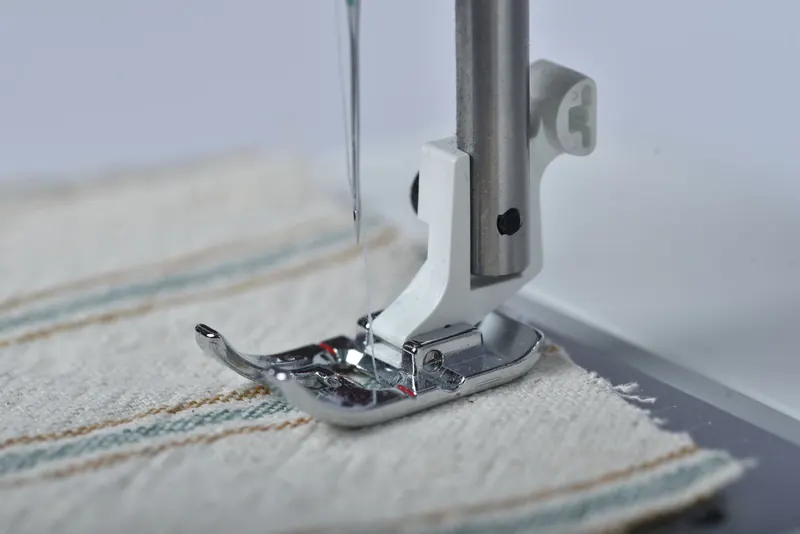
A new machine usually arrives with a small bag of feet, and it is tempting to sew everything with the one already fitted. That works for straight seams, but zips, hems and thick layers become far easier with the right foot. This guide explains what each common foot does, when to use it and what to check before buying extras, including the shank type of your machine.
The feet that usually come in the box
Accessory packs vary by model, but most domestic machines include an all purpose zigzag foot, a zipper foot, a buttonhole foot and often a blind hem foot and a button sewing foot. Computerised machines may add an overcasting foot, a satin stitch foot for decorative stitches, or a clear foot for appliqué. Check your manual for the full list and the letter or code each foot carries, as makers often mark feet with letters such as A, I, J or R.
The figure below shows the outline of the most common feet and the difference between low and high shank heights.
All purpose zigzag
Zipper
Blind hem
Buttonhole slider
Walking foot
Rolled hem
Low shank feet measure about 19 mm from the bottom of the foot to the screw, high shank about 25 mm: check the manual before buying feet.
Common presser feet and what they do
This table summarises the feet most home sewers use. Names differ slightly between makers, but the shapes and jobs are much the same.
| Foot | What it does | Typical projects |
|---|---|---|
| All purpose zigzag | Wide opening for straight and zigzag stitches | Everyday seams, finishing edges |
| Zipper | Narrow foot that lets the needle sew close to zip teeth on either side | Zips, piping, cording |
| Buttonhole | Slider or sensor foot that measures and guides the buttonhole | Shirts, cardigans, bags |
| Blind hem | Guide edge for the fold so the needle just catches the fabric | Invisible hems on trousers and skirts |
| Walking foot | Feeds the top layer in step with the feed dogs | Quilting, knits, velvet, checks |
| Rolled hem | Curls a narrow edge under before it is stitched | Scarves, napkins, chiffon hems |
| Overcasting | Holds stitches over the cut edge | Seam finishing without an overlocker |
| Open toe or satin | Clear view and a groove under the sole for dense stitches | Appliqué, decorative stitches |
Zipper and walking feet in detail
A zipper foot is narrow so the needle can stitch right beside the zip teeth. On most snap-on systems you clip it on to the left or right of the ankle depending on which side of the zip you are sewing, and some machines also let you move the needle position. An invisible zip foot is a separate foot with grooves that unroll the coils so the stitches sit hidden in the seam.
A walking foot, also called an even feed foot, has its own set of feed teeth on top that move with the machine's feed dogs underneath. An arm sits over the needle clamp screw so the foot moves with each stitch. This stops the top layer creeping ahead, which is why quilters use it for stitching through quilt sandwiches and dressmakers use it for knits, velvet and matching stripes or checks. Walking feet are usually made for a specific shank or model, so buy one listed for your machine. See best sewing machines for quilting for machines that include one.
Hemming feet: rolled hem and blind hem
A rolled hem foot, sometimes called a hemmer foot, has a curled scroll at the front. You start the hem by hand, feed it into the scroll, and the foot rolls the edge under twice as you sew. It suits lightweight fabrics such as cotton lawn, chiffon and silk. Feet come in different widths, typically a few millimetres, and narrower ones need finer fabric. Brother and other makers sell rolled hem feet for their machines, and generic versions exist for low shank snap-on systems.
A blind hem foot has a guide that rests against the fold of the hem. With the blind hem stitch selected, the machine sews several straight stitches in the hem allowance and then a single sideways bite that just catches the main fabric. Done well, only tiny dots show on the right side. It takes a little practice to set the fold and stitch width, so test on a scrap first.
- 1
Press the hem allowance up, then fold it back so the raw edge sticks out by about half a centimetre.
- 2
Place the fold against the guide of the blind hem foot.
- 3
Select the blind hem stitch and sew slowly so the wide stitch only just catches the fold.
- 4
Open out the hem and press from the wrong side.
Buying extra feet
Before buying, check three things: the shank type (low, high or slant), whether your machine uses snap-on feet, and the maximum stitch width. A foot made for a narrower stitch could be struck by the needle on wide zigzag. Our article are sewing machine feet universal? explains how to measure the shank and use adaptors.
Branded feet listed for your exact model are the safest choice. Generic sets can be good value for simple feet, but check the listing carefully, and always turn the handwheel slowly by hand after fitting a new foot to make sure the needle clears it. If you are still choosing a machine, our best sewing machines for dressmaking guide notes which feet each model includes.
Note:Switch off and unplug the machine before changing feet or needles. If the needle strikes a correctly fitted foot, stop sewing and consult your manual or a qualified sewing machine engineer.
Frequently asked questions
Do I need a walking foot? Not for everyday cotton seams, but it helps a lot with quilting, layered fabrics, knits and slippery or napped fabrics such as velvet. If your seams end with one layer longer than the other, a walking foot is worth trying.
Can I sew a zip without a zipper foot? You can with some machines by moving the needle position, but a zipper foot makes it much easier to stitch close to the teeth without the foot riding up on them.
Does Brother make a rolled hem foot? Brother sells rolled hem feet for many of its machines, and generic low shank snap-on versions are widely available. Check the foot is listed for your model and suits your fabric weight.
What is the difference between a hemming foot and a blind hem foot? A hemming or rolled hem foot rolls a narrow edge and stitches it with a visible line. A blind hem foot guides a folded hem so the stitches are almost invisible from the right side.
What you need
- Check price on AmazonAffiliate link
Janome MC9480QC: stitch regulator and ruler foot
- Check price on AmazonAffiliate link
Janome 5270QDC: 270 stitches, 12 buttonholes, knee lifter
- Check price on AmazonAffiliate link
Brother SH40: 40 stitches, 5 one-step buttonholes
- Check price on AmazonAffiliate link
Brother FS100WT: 100 stitches plus wide table