Guide
Sewing machine needle size chart
Published
Note: This page contains affiliate links. If you buy through them we may earn a commission at no extra cost to you. Learn more
In short
Sewing machine needles carry two numbers, a metric NM size and a US size, such as 80/12 or 90/14. The bigger the number, the thicker the needle. Use 60/8 to 70/10 for fine fabrics, 80/12 for everyday cotton, 90/14 for medium weights and 100/16 to 120/19 for denim, canvas and upholstery, then pick the point type to suit woven or knit fabric.
Products for this job
Compare all 7 productsBrother SH40: 40 stitches, 5 one-step buttonholes
Check price on AmazonAffiliate linkJanome 725S: 25 stitches, extra-high foot lift
Check price on AmazonAffiliate linkJuki HZL-LB5020: needle up/down and speed override
Check price on AmazonAffiliate link
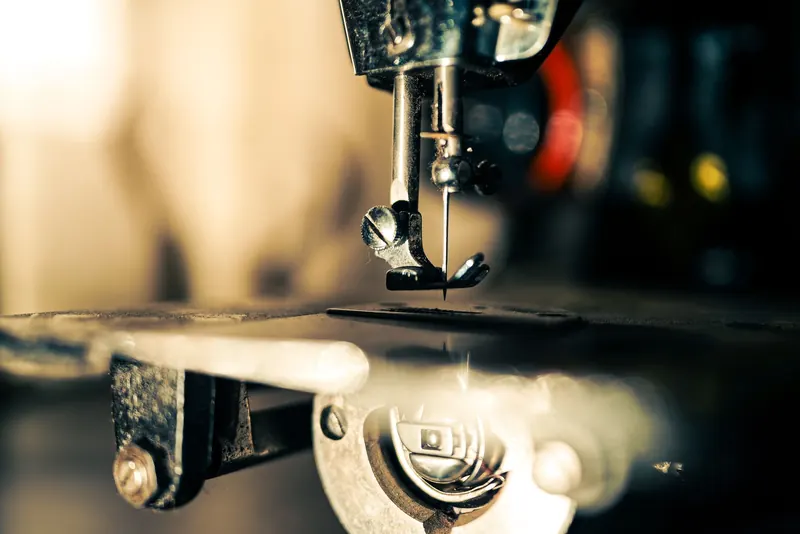
The packet in your sewing box probably says something like 90/14 and 'universal', and it is easy to ignore both. Yet the needle is the cheapest part of the machine and the one that causes the most trouble when it is wrong. Too fine and it bends or snaps on thick seams; too thick and it leaves holes in silk; the wrong point and knits ladder or skip. This chart pairs each common size with typical fabrics and explains the point types, so you can choose quickly and get on with sewing.
How needle sizes are numbered
Most needle packets show two figures separated by a slash. The first is the metric size, often called NM, which is the diameter of the blade in hundredths of a millimetre, so an 80 needle is 0.8 mm across. The second is the American or Singer size, which runs on a separate scale from 8 to 19 or 20. Both numbers describe the same needle, so 80/12 is simply a size 80 metric or size 12 US.
The rule is easy to remember: higher numbers mean thicker needles for heavier fabrics and thicker threads. The size is usually stamped on the shank of the needle itself as well as on the packet, although on very fine needles you may need a magnifier to read it. The flat side of the shank faces the back on most domestic machines, which is how the needle sits correctly in the clamp.
Sewing machine needle size chart
Use this table as common guidance rather than a strict rule. Fabric weights vary a lot within one name, so a fine cotton lawn and a heavy cotton drill need very different needles. If in doubt, sew a test seam on a scrap of the same fabric, folded to the thickness of your real seam, and go up or down one size until the stitches look neat and the fabric shows no holes or puckers.
| Metric (NM) | US size | Typical fabrics |
|---|---|---|
| 60 | 8 | Silk, chiffon, organza and other sheer fabrics |
| 65 | 9 | Silk, chiffon, organza, fine georgette |
| 70 | 10 | Lawn, voile, fine cotton |
| 75 | 11 | Lightweight jersey and lingerie knits (ballpoint or stretch point) |
| 80 | 12 | Quilting cotton, poplin, shirting |
| 90 | 14 | Medium weight cotton, linen, fleece, light denim |
| 100 | 16 | Denim, canvas, upholstery fabric |
| 110 | 18 | Heavy denim, heavy canvas |
| 120 | 19 | Very heavy canvas and upholstery |
Needle point types: universal, jersey, stretch and denim
Size tells you how thick the needle is. The point type tells you how it passes through the fabric, and getting this right matters just as much. Each type is sold in a range of sizes, so you choose both: for example a 75/11 stretch needle for a fine elastane jersey, or a 100/16 denim needle for jeans.
If you sew a mix of projects, a pack of universal needles in 80/12 and 90/14, a pack of ballpoint or stretch needles and a few denim needles will cover most home sewing. Our needle size guide lets you pick a fabric and see the matching size pair and point type.
- Universal: a slightly rounded sharp point for most woven fabrics, and a reasonable fallback for stable knits.
- Ballpoint or jersey: a rounded tip that pushes between knit loops instead of piercing them, which helps avoid ladders and holes in T-shirt jersey and sweatshirt fabric.
- Stretch: a medium ball point with a special eye and scarf shape, designed for fabrics containing elastane or Lycra, where skipped stitches are common.
- Denim or jeans: a strong, sharp point and stiffer blade for dense wovens such as denim, canvas and heavy twill.
- Quilting, embroidery and topstitch: specialist needles for piecing through several layers, for rayon or polyester embroidery thread, and for thicker topstitching thread with a larger eye.
Matching thread to needle size
The thread has to sit in the groove down the front of the needle and pass freely through the eye. If the thread is too thick for the needle, it frays, shreds or breaks, and the stitches can look uneven. If the needle is far too large for the thread, the holes can be bigger than the thread fills, which shows on fine fabrics.
As a rough guide, standard all purpose polyester thread suits sizes 70/10 to 90/14. Fine threads used for heirloom sewing or lingerie suit the smaller sizes, while thick topstitching or jeans thread usually needs a 100/16 or a topstitch needle with a long eye. Thread makers often print a recommended needle range on the spool or their website, and it is worth following that advice.
When to change your needle
Needles dull and develop tiny burrs long before they look damaged. A common rule of thumb is to fit a new needle at the start of each new project or after several hours of sewing, and straight away after hitting a pin. Signs of a tired needle include a popping or punching sound, skipped stitches, snagged threads in the fabric and thread that keeps fraying.
Fitting a needle is the same principle on most domestic machines: raise the needle to its highest point, loosen the clamp screw, remove the old needle, push the new one up as far as it will go with the flat side facing the back, then tighten the screw. Check your manual, because some machines differ, and use the correct needle system for your machine. If you are choosing a new machine for heavier fabric, see our guide to the best heavy duty sewing machines.
Note:Switch off and unplug the machine before changing a needle, cleaning or opening any covers. If the needle hits the plate or the stitches fail after a correct needle change, the timing may be out: that is a job for a qualified sewing machine engineer.
Frequently asked questions
What size sewing machine needle is most common? The 80/12 and 90/14 universal sizes are the most widely used, because together they cover quilting cotton, poplin, shirting, linen and other medium weight woven fabrics. Many machines are supplied with a needle in one of these sizes fitted.
Is a 90/14 or 100/16 needle better for denim? For lightweight denim or chambray, a 90/14 is often enough. For standard jeans weight denim, a 100/16 denim needle is the usual choice, and for heavy denim or seams with many layers you may need a 110/18. Test on the thickest part of your seam first.
Can I use a universal needle on jersey? You can on stable knits, but a ballpoint or jersey needle usually gives better results because it slides between the loops rather than piercing them. For fabrics with elastane, a stretch needle is the safer choice if you get skipped stitches.
Do overlockers use the same needles? Many domestic overlockers use the same 130/705H system as sewing machines, but some use different systems, often industrial types. Always check your overlocker manual before buying needles. Read more in are sewing machine needles universal?
What you need
- Check price on AmazonAffiliate link
Brother SH40: 40 stitches, 5 one-step buttonholes
- Check price on AmazonAffiliate link
Janome HD3000BE: metal body plus quilting kit
- Check price on AmazonAffiliate link
Janome 5270QDC: 270 stitches, 12 buttonholes, knee lifter
- Check price on AmazonAffiliate link
Janome 8004D: pre-threaded, colour coded guides