Fix
Sewing machine pedal or motor not working: what to check
Published
Note: This page contains affiliate links. If you buy through them we may earn a commission at no extra cost to you. Learn more
In short
First check the simple things: the mains plug and switch, that the pedal lead is pushed fully into the machine, that the bobbin winder shaft is not engaged, and on computerised machines that the start/stop button and speed slider are set for pedal use. If the machine still does not run, or the pedal is damaged, hot or erratic, stop using it and contact a qualified sewing machine engineer or the maker for a replacement pedal.
Products for this job
Compare all 6 productsJanome JW8100: 100 stitches, 7 buttonhole styles
Check price on AmazonAffiliate linkJanome 360DC: 60 stitches, 7 mm zigzag
Check price on AmazonAffiliate linkBrother FS200CE: 200 stitches with walking foot
Check price on AmazonAffiliate link
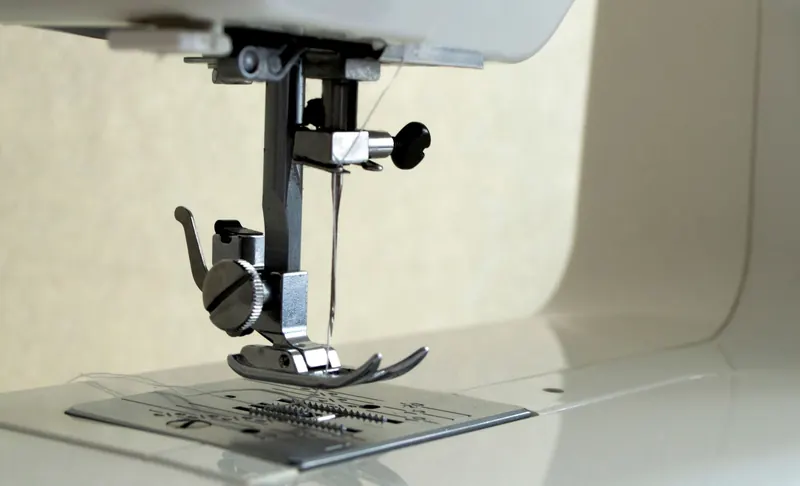
When you press the pedal and nothing happens, it is easy to assume the motor has failed. In practice, many cases come down to a loose plug, a setting or a safety feature that stops the machine running. This guide covers the checks you can safely make yourself, in order, and explains where to stop and hand over to a professional. It applies to most electric domestic machines, both mechanical and computerised.
Safety first
Sewing machines run on mains electricity, and the pedal, its lead and the motor carry current. Only do the visual and settings checks below. Do not open the pedal, the motor housing or the machine's covers to look at wiring, and do not try to repair a damaged lead with tape.
If you notice a burning smell, smoke, sparks, a cracked pedal casing, a damaged cable or a pedal that gets hot, switch off at the wall, unplug and do not use the machine until it has been checked.
Note:Switch off and unplug the machine before cleaning, changing needles or opening any cover. Motor, wiring, pedal internals and timing faults should be handled by a qualified sewing machine engineer.
Check 1: power, plugs and the power switch
Check that the wall socket is switched on and works with another appliance. Then check every connection: the mains lead into the machine, the pedal lead into the machine, and on some models the pedal and power share one combined plug. Push each plug fully home; they can work loose when the machine is moved. Turn on the machine's power switch and look for the sewing light as a sign that power is reaching it.
If the light comes on but the motor does not run, the power supply is probably fine and the cause is more likely the pedal, a setting or a jam. If nothing lights up at all, check the plug fuse if you are comfortable doing so, or ask an electrician or sewing machine engineer.
- 1
Test the wall socket with another appliance.
- 2
Push the mains plug and the pedal plug fully into the machine.
- 3
Turn the machine's power switch on.
- 4
Check whether the sewing light comes on.
- 5
Turn the handwheel by hand to check the machine is not jammed.
Check 2: the bobbin winder and handwheel clutch
On many machines, pushing the bobbin winder shaft across engages winding and disconnects or stops the needle. If it has been left engaged, the motor may run the winder but the needle will not move, or on some computerised models the machine will not sew at all and may show a message. Push the winder shaft back to the sewing position.
Older mechanical machines often have a clutch knob in the centre of the handwheel that you loosen to wind a bobbin. If it is left loose, the motor turns but the needle does not. Tighten it by turning it towards you, as your manual describes.
Check 3: start/stop button and speed slider
Many computerised machines have a start/stop button so you can sew without the pedal. On most of these, the start/stop button cannot be used while the pedal is plugged in, or the pedal takes priority, and the exact behaviour varies by model. Check your manual for which mode should be active.
Look at the speed slider too. If it is set right down to its slowest position, the machine may run so slowly it seems not to work, especially on thick fabric. Slide it towards the middle and try again. Some machines also refuse to run when the presser foot is raised or the buttonhole lever is not set correctly, and show a warning on the screen or with a light. Your manual will list these messages.
| What you notice | Possible cause | What to do |
|---|---|---|
| Nothing lights up | No power at the socket or a loose mains plug | Check socket and plugs |
| Light on, motor silent | Pedal lead loose or pedal faulty | Reseat the pedal plug, then seek a replacement pedal |
| Motor hums, needle still | Bobbin winder engaged, clutch loose or jam | Disengage winder, tighten clutch, clear jam |
| Very slow running | Speed slider at minimum | Move the slider up |
| Warning light or message | Presser foot up or a mode setting | Check the manual for the message |
| Runs flat out or jerky | Faulty pedal | Stop using it and get it checked |
Check 4: jams that stop the motor
If the motor hums but the needle does not move, thread may be jammed in the bobbin area. Switch off and unplug, remove the needle plate as your manual shows, take out the bobbin and carefully cut away any trapped thread. Then turn the handwheel gently towards you; it should move freely. Never force it. A machine that will not turn by hand after clearing visible thread needs a service.
Lint packed around the hook and feed dogs can also make a machine stiff and slow. Regular cleaning helps; see our guide on how to clean and oil a sewing machine.
When the pedal needs replacing
Foot pedals wear out, and a pedal that is cracked, has a damaged lead, gets warm, runs the machine at full speed with no control, or works only when pressed at a certain angle should be replaced rather than repaired at home. Pedals are specific to the machine or brand, with different plugs and electrical ratings, so buy a replacement made for your model from the maker or an authorised dealer, or ask a sewing machine engineer to supply one.
If the pedal is fine but the motor still does not run, the fault may be in the motor, circuit board or internal wiring. These are jobs for a qualified sewing machine engineer. If the repair is not worthwhile on an older machine, our guides to the best sewing machines for beginners and the best computerised sewing machines cover current options, including models with start/stop buttons that can sew without a pedal.
Frequently asked questions
Can I use any foot pedal with my sewing machine? No. Pedals are designed for particular machines, with matching plugs and electrical ratings. Use the pedal specified by the maker for your model.
Why does my sewing machine run but the needle does not move? The bobbin winder is probably engaged, or on older machines the handwheel clutch is loose. Disengage the winder or tighten the clutch and try again.
Why does my sewing machine only run at full speed? A pedal that gives no speed control is usually faulty. Stop using it, unplug the machine and get a replacement pedal or have it checked by an engineer.
Is it safe to open the pedal to fix it? No. The pedal carries mains current. Leave internal pedal, motor and wiring repairs to a qualified sewing machine engineer.
What you need
- Check price on AmazonAffiliate link
Janome JW8100: 100 stitches, 7 buttonhole styles
- Check price on AmazonAffiliate link
Brother SH40: 40 stitches, 5 one-step buttonholes
- Check price on AmazonAffiliate link
Janome HD3000BE: metal body plus quilting kit