Fix
Sewing machine skipping stitches: fixes
Published
Note: This page contains affiliate links. If you buy through them we may earn a commission at no extra cost to you. Learn more
In short
Skipped stitches are most often caused by the needle: it is blunt, bent, inserted wrongly or the wrong type for the fabric, such as a universal needle on stretchy knit. Fit a new needle of the correct type and size, push it fully up with the flat side to the back, and rethread both threads. If stitches still skip on every fabric, the hook timing may be out and the machine needs a qualified engineer.
Products for this job
Compare all 6 productsJanome 5270QDC: 270 stitches, 12 buttonholes, knee lifter
Check price on AmazonAffiliate linkBernette 38: thread cutter and automatic tie-off
Check price on AmazonAffiliate linkPfaff Passport 3.0: built-in IDT dual feed
Check price on AmazonAffiliate link
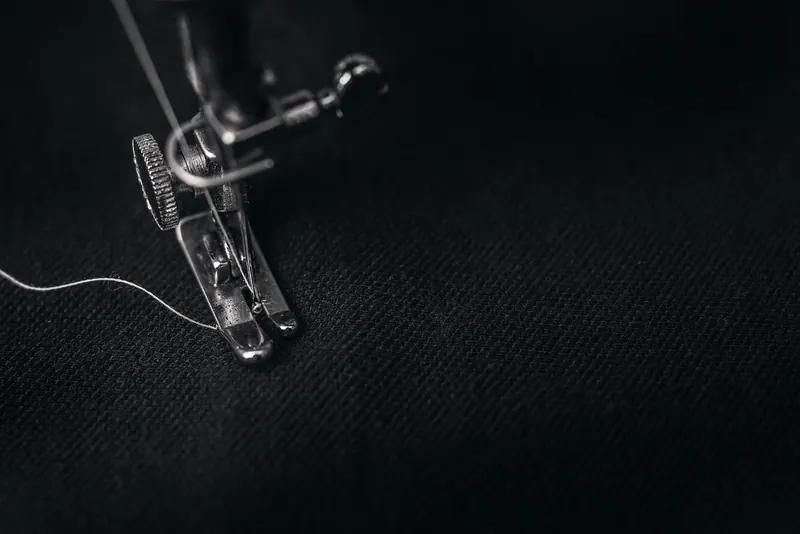
A skipped stitch happens when the hook underneath fails to catch the loop of upper thread as the needle rises. The seam shows a longer gap, and on stretch fabric it may pop open. Because that loop is formed by the needle, the needle is the first and most likely culprit. This guide explains how the loop forms, how to choose the right needle, and the less common causes, including timing faults that need a professional.
Why stitches get skipped
As the needle rises from its lowest point, friction with the fabric makes the upper thread form a small loop on the back of the needle, just above the eye. The tip of the hook passes through that loop, right in the scarf, the scooped area on the back of the needle. If the loop is too small, too late or in the wrong place, the hook misses it and no stitch forms.
Anything that changes the loop can cause skipping: a bent or blunt needle, a needle the wrong way round or not fully inserted, a needle type that suits a different fabric, fabric that bounces up with the needle, or a hook that is no longer in time with the needle.
Fix 1: fit the right needle, the right way
Start with a brand new needle. Needles dull with use and can bend slightly after hitting a pin, which is enough to make the hook miss. On most domestic machines, which use the 130/705H needle system, the flat side of the shank faces the back. Push the needle all the way up into the clamp before tightening the screw, because a needle sitting even slightly low changes where the loop forms.
Choose the point type for the fabric. Universal needles suit most wovens. Ballpoint or jersey needles have a rounded tip that slips between knit fibres instead of piercing them, and stretch needles have a special eye and scarf shape designed for elastane fabrics, which are particularly prone to skipped stitches. Denim needles have a sharp, strong point for dense wovens. Our needle size guide matches fabrics to sizes and point types as common guidance.
| Fabric | Needle type | Common sizes |
|---|---|---|
| Quilting cotton, poplin | Universal | 80/12 |
| Lightweight jersey | Ballpoint or jersey | 75/11 |
| Fabric with elastane | Stretch | 75/11 to 90/14 |
| Denim, canvas | Denim (jeans) | 100/16 to 110/18 |
| Silk, chiffon | Universal or microtex (fine sharp point) | 60/8 to 70/10 |
Fix 2: rethread both threads
A thread that has slipped out of a guide or the take-up lever can affect loop formation. Remove the upper thread and rethread with the presser foot up and the take-up lever at its highest point; our guide to threading a sewing machine covers the route. Check the bobbin is the right type and inserted in the direction shown in your manual.
Use thread suited to the needle size. Thick thread in a fine needle can stop the loop forming cleanly, while very fine thread in a large needle may not grip enough. Good quality all-purpose thread is the safest choice for testing.
Fix 3: fabric, presser foot and technique
Lightweight and stretchy fabrics can lift with the needle, a problem called flagging, which spoils the loop. Make sure the presser foot is down and the presser foot pressure, if your machine has a dial, is not set too light. Sewing over a strip of tissue paper or a light stabiliser can help with very fine or slippery fabric, and a smaller needle plate hole, such as a straight stitch plate where your machine offers one, gives more support.
Do not pull or push the fabric. Dragging it deflects the needle, so the hook misses the loop and the needle may strike the plate. Let the feed dogs move the fabric at their own pace. Skipping over thick seams, such as when hemming jeans, often improves with a denim needle, slower sewing and a levelling tool or folded scrap under the back of the foot.
- 1
Fit a new needle of the right type and size.
- 2
Rethread top and bobbin.
- 3
Test on a double layer of the actual fabric.
- 4
If knit fabric still skips, switch to a stretch needle.
- 5
Try tissue paper or stabiliser under fine fabric.
When skipping means a timing problem
If the machine skips stitches on every fabric, with a new needle and correct threading, and especially if the problem started after a needle broke or the machine was dropped, the hook timing may have been knocked out. Timing is the relationship between the needle's up and down movement and the hook's rotation. Setting it needs the right tools and experience, and making the problem worse is easy.
Timing should be checked and adjusted by a qualified sewing machine engineer, not at home. If an older machine needs repeated repairs, it may be time to compare current models; our guide to the best sewing machines for dressmaking covers machines that handle a wide range of fabrics.
Note:Switch off and unplug the machine before changing needles or removing the needle plate. Leave timing, motor and wiring faults to a qualified sewing machine engineer.
Frequently asked questions
Why is my Singer sewing machine not stitching? If the needle moves but no stitches form, the upper thread is often missing the take-up lever, the needle is in the wrong way, or the bobbin thread is not being caught. Rethread, fit a new needle with the flat side to the back and check the bobbin. If it still will not stitch, the timing may need a service.
Why does my machine skip stitches on stretch fabric? Universal needles can pierce knit fibres and form poor loops. Use a ballpoint or stretch needle, a stretch or narrow zigzag stitch, and avoid pulling the fabric.
How often should I change my needle? There is no fixed rule, but many sewers fit a new needle at the start of each project, and straight away after hitting a pin or when stitching starts to look uneven.
Can I fix sewing machine timing myself? It is not recommended. Timing adjustments need precise settings that vary by model, and a mistake can cause needle strikes and damage. Use a qualified sewing machine engineer.
What you need
- Check price on AmazonAffiliate link
Janome 5270QDC: 270 stitches, 12 buttonholes, knee lifter
- Check price on AmazonAffiliate link
Singer 4411: metal frame, 1,100 stitches a minute
- Check price on AmazonAffiliate link
Janome HD3000BE: metal body plus quilting kit