How-to
How to hem jeans with a sewing machine
Published
Note: This page contains affiliate links. If you buy through them we may earn a commission at no extra cost to you. Learn more
In short
Fit a 100/16 denim needle, mark the new length, trim leaving a hem allowance, fold the edge up twice and topstitch with a longer stitch. Slow down and flatten the thick side seams before you reach them, or use a hump jumper. To keep the factory finish, use the original hem method instead: fold the old hem up and stitch just below it.
Products for this job
Compare all 7 productsJanome HD3000BE: metal body plus quilting kit
Check price on AmazonAffiliate linkBrother HF27: non stick foot for leather and PVC
Check price on AmazonAffiliate linkSinger 4411: metal frame, 1,100 stitches a minute
Check price on AmazonAffiliate link
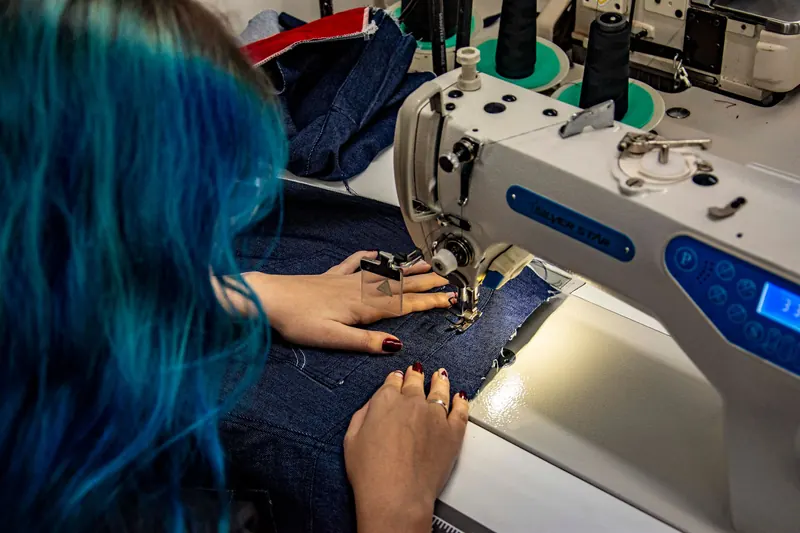
Most jeans are sold too long, and hemming them yourself saves a trip to the alterations shop. Denim is thick, and the side seams can be several layers deep, so this job tests a domestic machine more than most. With the right needle, a slower speed and a few tricks for the bulky seams, most home sewing machines can manage a neat hem. This guide covers both the standard double fold hem and the original hem method.
What you need
Gather everything before you start. The key items are a proper denim needle and suitable thread, because a universal needle in a small size is likely to bend or break on denim seams.
- Denim or jeans needle, size 100/16 for most jeans, 90/14 for light denim, 110/18 for heavy denim.
- Topstitch or jeans thread in a matching gold or blue for the visible stitching, with all purpose thread in the bobbin.
- A topstitch needle if your thread is thick, as its longer eye stops fraying.
- Tape measure, chalk or a fabric pen, pins or clips and sharp scissors.
- A hump jumper or a folded piece of card to level the foot over seams.
- An iron and, ideally, a small hammer or mallet to flatten the seams.
Measure and mark the new length
Measure twice, because denim cannot be lengthened once cut. If one leg is slightly longer, as often happens, mark each leg separately from the floor rather than copying one to the other.
- 1
Try the jeans on with the shoes you will wear most and fold the hem up to the right length.
- 2
Pin at the fold, take them off, and measure from the fold to the original hem on both legs.
- 3
Lay the jeans flat and mark the finished length with chalk all the way round each leg.
- 4
Add a hem allowance below the mark: about 2.5 cm for a standard double fold hem.
- 5
Cut along the allowance line. Check that both legs match before cutting the second.
Sewing a double fold hem
Fold the raw edge up by about 1.25 cm and press, then fold again by the same amount so the raw edge is enclosed, and press firmly. Clip in place. Set a stitch length of around 3 to 3.5 mm, which looks right for topstitching and copes with thick layers better than a short stitch.
Start sewing on the inside leg, just after the seam, and stitch close to the upper fold from the right side or the wrong side, depending on which gives you a better view. Sew slowly with even pressure. When you reach a side seam, follow the tips in the next section. Finish where you started, overlapping a few stitches, and pull the threads to the inside to tie off.
Getting over the side seam hump
The flat felled and overlocked seams on jeans make a step that can stall the machine, tilt the foot and cause skipped stitches or a broken needle. These tips help on most domestic machines.
- 1
Before sewing, hammer the seam allowances flat on a hard surface, protecting the fabric with a scrap of cotton.
- 2
Approach the hump slowly. Stop with the needle down just before the foot climbs it.
- 3
Lift the foot, slide a hump jumper or folded card under the back of the foot so it is level, then lower the foot.
- 4
Turn the handwheel by hand for the stitches over the thickest part.
- 5
Once the front of the foot drops off the hump, stop with the needle down and move the leveller to the front.
- 6
Continue sewing at a slow, steady speed.
Note:Never force the handwheel if it resists. Switch off and unplug the machine before changing needles or clearing a jam. If the needle keeps hitting the plate or the machine knocks, have a qualified sewing machine engineer check the timing.
Keeping the original hem
The original hem method keeps the worn, factory look of the old hem. Measure how much to remove, then halve it. Fold the leg up inside so the fold sits at half the amount above the finished length, which puts the old hem the correct distance away. Pin all round, keeping the side seams aligned.
Use a zipper foot or a narrow foot and stitch with matching all purpose thread right along the edge of the old hem, close to its stitching line. Trim the excess fabric inside to about 1 cm and neaten the raw edge with zigzag or an overlocker. Fold the old hem down and press, pressing the small new seam allowance upwards. Topstitching the allowance in place is optional. If you hem jeans often, see our guide to the best heavy duty sewing machines.
Frequently asked questions
Can any sewing machine sew jeans? Most domestic machines can hem jeans with a denim needle and patience at the side seams. Very light machines may struggle with many layers. For regular denim work, see the best sewing machines for beginners and heavy duty options.
What needle should I use to hem jeans? A denim or jeans needle in size 100/16 suits most jeans. Use 90/14 for light denim and 110/18 for heavy denim or very thick seams. Fit a new needle before you start.
What thread do jeans use? The visible stitching on jeans is usually a thicker topstitch thread in gold, orange or blue. Use it in the needle with a topstitch or denim needle, and ordinary thread in the bobbin.
Why does my machine skip stitches on the side seams? The foot tilts as it climbs the seam, so the fabric lifts and the hook misses the thread. Use a hump jumper to keep the foot level, flatten the seams first and turn the handwheel by hand over the thickest point.
What you need
- Check price on AmazonAffiliate link
Janome HD3000BE: metal body plus quilting kit
- Check price on AmazonAffiliate link
Brother SH40: 40 stitches, 5 one-step buttonholes
- Check price on AmazonAffiliate link
Janome JW8100: 100 stitches, 7 buttonhole styles