How-to
How to sew stretch fabric on a sewing machine
Published
Note: This page contains affiliate links. If you buy through them we may earn a commission at no extra cost to you. Learn more
In short
Use a ballpoint or stretch needle, choose a stitch that can stretch, such as a narrow zigzag or your machine's lightning or stretch stitch, and let the machine feed the fabric without pulling it. Lighten the presser foot pressure if your machine allows, and use a walking foot if the layers creep. On an overlocker, adjust the differential feed to stop wavy seams.
Products for this job
Compare all 6 productsJanome 5270QDC: 270 stitches, 12 buttonholes, knee lifter
Check price on AmazonAffiliate linkBernette 38: thread cutter and automatic tie-off
Check price on AmazonAffiliate linkPfaff Passport 3.0: built-in IDT dual feed
Check price on AmazonAffiliate link
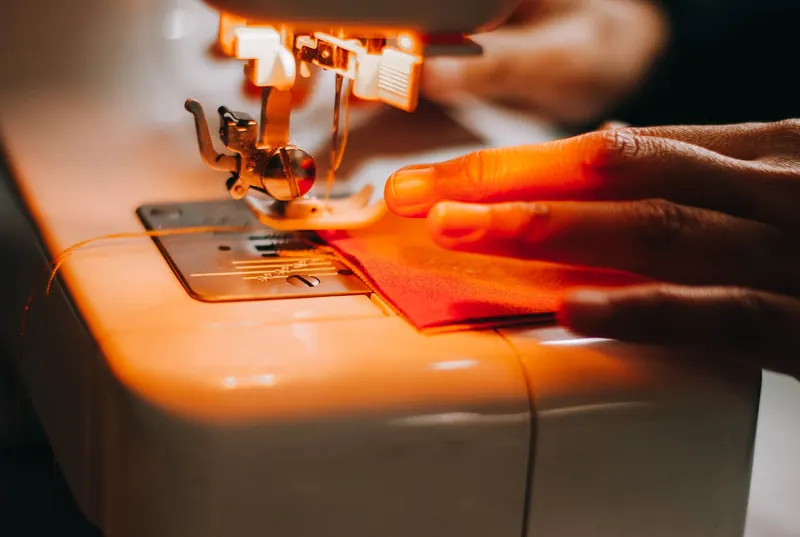
Jersey, sweatshirt fleece, ponte and swimwear fabric make comfortable clothes, but they can be awkward on a sewing machine. Seams stretch out into waves, stitches pop when the garment is pulled on, and the machine sometimes skips stitches. The good news is that an ordinary domestic sewing machine handles knits well once the needle, stitch and handling are right. This guide covers the settings for stretchy fabric, step by step.
Choose the right needle and thread
The needle makes the biggest difference. A ballpoint or jersey needle has a rounded tip that slides between the knit loops rather than cutting them, so it avoids holes and ladders in cotton jersey and sweatshirt fabric. A stretch needle has a medium ball point and a shape designed to reduce skipped stitches in fabric with elastane, such as leggings, swimwear and power mesh.
Sizes 75/11 and 80/12 suit most lightweight and medium jerseys, with 90/14 for heavier fleece and ponte. Use a good quality all purpose polyester thread, which has a little give. Our sewing machine needle size chart and needle size guide show the full range.
Pick a stitch that stretches
A standard straight stitch has almost no give, so it can snap when the seam is stretched. Instead, use one of the stitches below. Many computerised machines label stretch stitches with a small icon in the stitch chart; your manual shows which ones are intended for knits.
| Stitch | Typical setting | Best for |
|---|---|---|
| Narrow zigzag | Width around 1 to 1.5 mm, length around 2 to 2.5 mm | General seams on any machine |
| Lightning or stretch straight stitch | Preset on many computerised machines | Seams that look straight but need to stretch |
| Triple stretch stitch | Preset; sews each stitch three times | Strong seams in sportswear; hard to unpick |
| Overlock style or overcasting stitch | Preset, often with an overcasting foot | Seam and edge finish in one pass |
| Twin needle straight stitch | Twin stretch needle, normal length | Hems on T-shirts and dresses |
Step by step: sewing a jersey seam
Start each seam with the fabric well under the foot, or begin on a small scrap, so the needle does not push the edge of the knit down into the needle plate. A clear stitch plate area and fresh needle help avoid this.
- 1
Fit a new ballpoint or stretch needle in the right size, with the machine switched off.
- 2
Select a narrow zigzag or stretch stitch and sew a test seam on a scrap of the same fabric.
- 3
Reduce presser foot pressure if your machine has a dial, so the foot does not push the top layer forward.
- 4
Pin or clip the layers along the seam, keeping pins at right angles to the edge.
- 5
Hold the fabric lightly in front of and behind the foot. Guide it, but do not push or pull.
- 6
Sew at a steady, moderate speed and stop with the needle down to pivot.
- 7
Stretch the test seam gently: if stitches pop, widen the zigzag or switch to a stretch stitch.
- 8
Press with a cool to medium iron and a pressing cloth, without stretching the seam.
Note:Switch off and unplug the machine before changing the needle or presser foot. If the machine keeps skipping or jamming after a needle change and rethreading, a qualified sewing machine engineer should check the timing.
Stop wavy seams with a walking foot or stabiliser
Wavy, stretched seams happen when the feed dogs pull the bottom layer through while the presser foot holds the top layer back, or when the fabric is stretched as it feeds. A walking foot feeds the top layer in step with the bottom and is one of the best fixes on a domestic machine. Lowering the presser foot pressure, if available, also helps.
On shoulder seams and necklines, a strip of clear elastic, stay tape or knit interfacing stabilises the seam so it does not stretch out over time. For very fine or slippery knits, a strip of tissue or tear-away stabiliser under the seam gives the feed dogs something to grip. Steam can often shrink a mildly wavy seam back into shape.
Using an overlocker and differential feed
An overlocker trims, sews and neatens the seam in one pass, using looped threads that stretch with the fabric. That makes it the natural partner for knits. Its differential feed uses two sets of feed dogs moving at different speeds. Setting it above normal (often marked 1.5 to 2) gathers the fabric slightly as it feeds, which stops knits stretching into waves. Setting it below normal helps stop fine wovens puckering.
Always test on scraps and adjust one setting at a time. Our guide to overlocker differential feed explains the settings in more detail, and the best overlockers for beginners guide covers machines suited to garment sewing. For hems on knits, a coverstitch machine gives the twin needle look with more stretch.
4 thread overlock
Coverstitch hem
Frequently asked questions
What are the best sewing machine settings for stretchy fabric? A ballpoint or stretch needle, a narrow zigzag (about 1 to 1.5 mm wide) or a stretch stitch, a medium stitch length and lighter presser foot pressure if available. Test on a scrap and adjust before sewing the garment.
Do I need an overlocker to sew jersey? No. A standard sewing machine with the right needle and a stretch or zigzag stitch can sew jersey well. An overlocker makes it faster and gives a neat finished edge, but it is optional.
Why does my machine skip stitches on stretch fabric? Usually the needle is wrong or worn. Fit a new stretch needle, rethread both threads and try again. If skipping continues, try a different size or brand of stretch needle.
How do I hem a T-shirt on a sewing machine? Use a twin stretch needle with a straight stitch, or a narrow zigzag, sewing from the right side. A strip of fusible knit tape in the hem helps stop tunnelling between the two rows.
What you need
- Check price on AmazonAffiliate link
Janome 5270QDC: 270 stitches, 12 buttonholes, knee lifter
- Check price on AmazonAffiliate link
Janome 8004D: pre-threaded, colour coded guides
- Check price on AmazonAffiliate link
Janome JW8100: 100 stitches, 7 buttonhole styles
- Check price on AmazonAffiliate link
Janome CoverPro 2000CPX: free arm cover hems